Birthstones get most of the attention, but nearly every month also has a flower assigned to it — a tradition that dates back to ancient Rome, when people decorated altars and gave flowers to mark birthdays. If you're looking for a birthday gift with a bit more meaning behind it than "whatever looked nice," matching the birth month flower is a simple way to do it.
A quick honesty note: not every culture agrees on every month's flower, and some months have two commonly cited options depending on the source. We're using the most widely recognized list, and noting the second option where one exists.
Where this tradition actually comes from
The Roman custom of decorating altars with flowers for birthdays laid the groundwork, but the specific month-by-month list most people recognize today took shape later, in 18th-century England, during the height of "floriography" — the Victorian practice of assigning specific meanings to individual flowers. That's also why the meanings below (resilience, humility, wisdom, and so on) sound distinctly Victorian in tone; they were formalized during that same period.
Birth flowers vs. zodiac flowers — not the same list
It's an easy mix-up: birth month flowers are assigned by calendar month (January, February, and so on), while zodiac or star-sign flowers are assigned by astrological sign, which doesn't line up neatly with calendar months since most signs span parts of two different months. If someone's birthday falls near the boundary between two zodiac signs, their birth month flower and their zodiac flower may not match at all — they're two separate traditions, not two versions of the same one.
January — Carnation
The carnation represents love, fascination, and resilience — fitting for the flower that opens the year. Soft pink and red tones work well here. Our Sweet Shine arrangement, built around soft pink carnations, is a direct match.
February — Violet
Violet symbolizes quiet strength, faithfulness, and humility. Purple and deep blue tones are the clearest way to echo the theme if you're not working from violets specifically.
March — Daffodil
Daffodils represent new beginnings and rebirth, fitting for the first true month of spring. Our Sunshine Wishes arrangement features real yellow daffodils alongside pink tulips — a genuine match rather than just a color coincidence.
April — Daisy
The daisy stands for innocence and purity, and its cheerful, simple shape makes it one of the most universally well-liked birth flowers. Crisp whites paired with a pop of bright color are the easiest way to lean into it.
May — Lily of the Valley
Lily of the valley represents sweetness and humility. It's a delicate, fragrant bloom that's less commonly available through most florists, so a soft white arrangement is the most practical way to echo the theme without needing the exact flower.
June — Rose
The rose is the best-known birth flower on this list, and arguably the easiest to shop for — nearly any rose-forward arrangement works. Our classic Roses arrangement is the most direct option.
July — Larkspur
Larkspur represents an open heart and strong bonds of love. It's a tall, spiky bloom that's less common in everyday arrangements, so bright, bold colors in general are the safest way to nod to a July birthday.
August — Gladiolus
Gladiolus symbolizes strength of character and moral integrity — fittingly, the name comes from the Latin word for sword. We currently work with gladiolus mainly in our sympathy arrangements rather than birthday designs, so for an August birthday we'd point toward bold, saturated colors instead of a literal gladiolus match.
September — Aster
The aster represents wisdom, faith, and valor. Its star-shaped bloom comes in purples, pinks, and whites — any of those tones works as a stand-in if the specific flower isn't available.
October — Marigold
Marigold represents warmth and creativity, with its bold orange and gold tones matching the season it belongs to. Warm autumnal colors are an easy, fitting direction for an October birthday.
November — Chrysanthemum
Chrysanthemums — often just called "mums" — represent happiness, joy, and long life. Our Blue Sunflower arrangement, built around crisp white chrysanthemums, was designed specifically as a birthday piece and fits this month directly.
December — Narcissus (Paperwhite)
Narcissus, particularly the paperwhite variety, represents hope and wishes for good fortune — a fitting note to end the year on. White, fragrant, winter-appropriate arrangements are the clearest way to echo the theme.
A Few Options to Consider
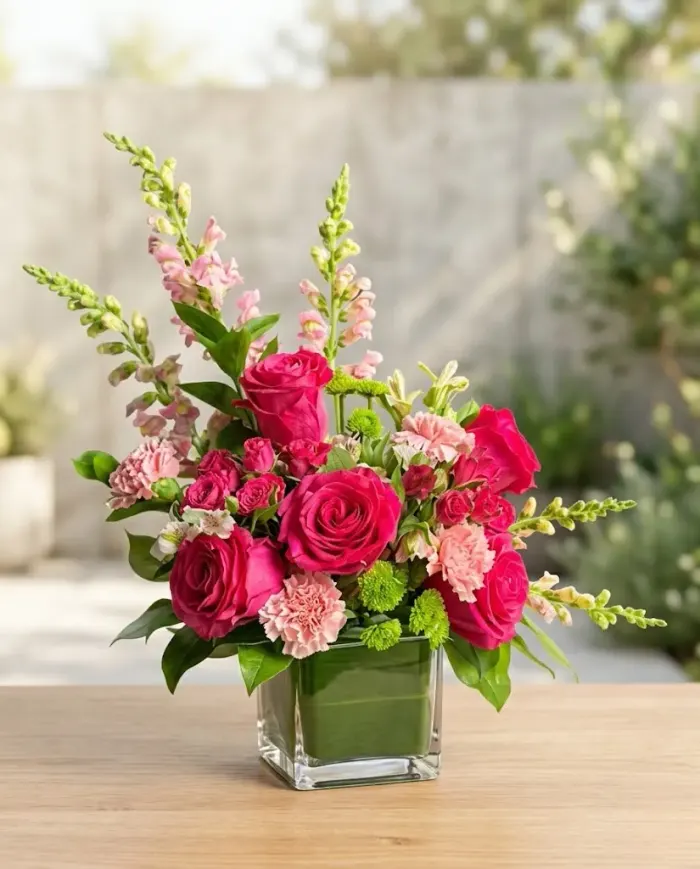
Sweet Shine
$75
Vibrant magenta roses take center stage among soft pink carnations, snapdragons, and green button mums in a sleek glass cube. A joyful pop of color for any birthday celebration.
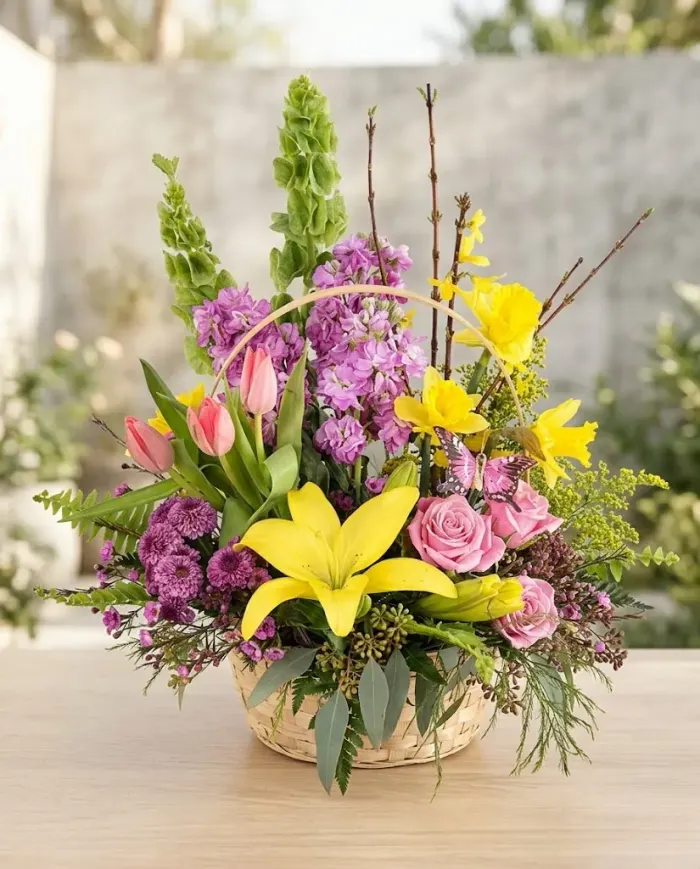
Sunshine Wishes
$125
A charming garden basket brimming with yellow daffodils, pink tulips, purple stock, and pink roses, finished with a whimsical butterfly accent. A delightful, spring-fresh birthday surprise.
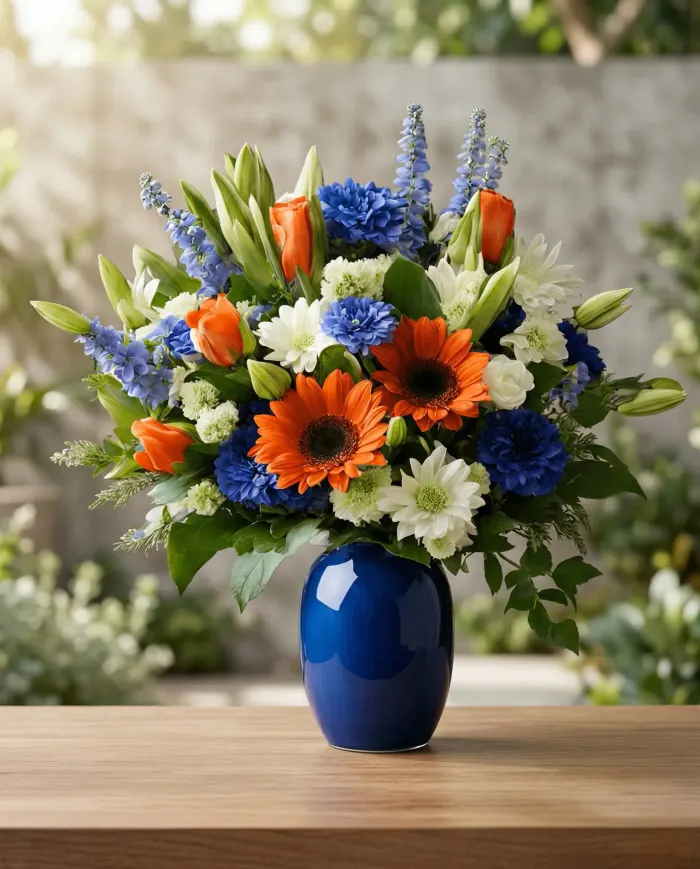
Blue Sunflower
$125
A striking mix of blue delphinium, navy pompons, and crisp white chrysanthemums brightened by fiery orange gerbera daisies and tulips, gathered in a rich cobalt vase. A bold, memorable way to say happy birthday.
What if you don't love your birth flower?
Plenty of birth flowers are either hard to find, out of season most of the year, or just not everyone's taste — and that's fine. This is a nice-to-know detail, not a rule. A recipient's actual favorite color or flower should always take priority over matching the calendar exactly.
Two birth flowers for the same month — which one do I use?
Several months have a secondary flower depending on the source (January is sometimes paired with snowdrop, February with primrose, for example). When that happens, either is considered correct — pick whichever is easier to actually find or whichever color direction you prefer.
A card message idea that ties it together
If you want the birth flower detail to actually land rather than just influence the color choice quietly, a short card note does the work: something like "Your birth flower, because every month deserves its own reason to celebrate" turns a coincidence into an intentional gesture, without needing to explain the whole tradition on the card itself.
Frequently asked questions
Do all cultures agree on the same birth flowers?
No — the list varies somewhat by region and source, and several months have two commonly cited flowers. We're using the most widely recognized version here.
What if the exact birth flower isn't available?
It's not a hard requirement — matching the general color or mood of the month's flower works just as well as the literal bloom.
Is this the same idea as birthstones?
Similar concept, different tradition — birth flowers date back to ancient Rome, while the birthstone list came later. Both are just ways to personalize a birthday gift.
Can I combine a birth flower with a favorite color instead?
Yes — there's no rule against it. If a specific color means more to the recipient than the calendar flower, go with the color.