If you've never ordered a flower box before, it's easy to assume it's just a bouquet with different marketing. It's not — the format itself changes a few real, practical things about the gift, beyond just how it looks in a photo. Here's an honest comparison to help you pick the right one, based on our own collection rather than a generic industry take.
What a flower box actually is
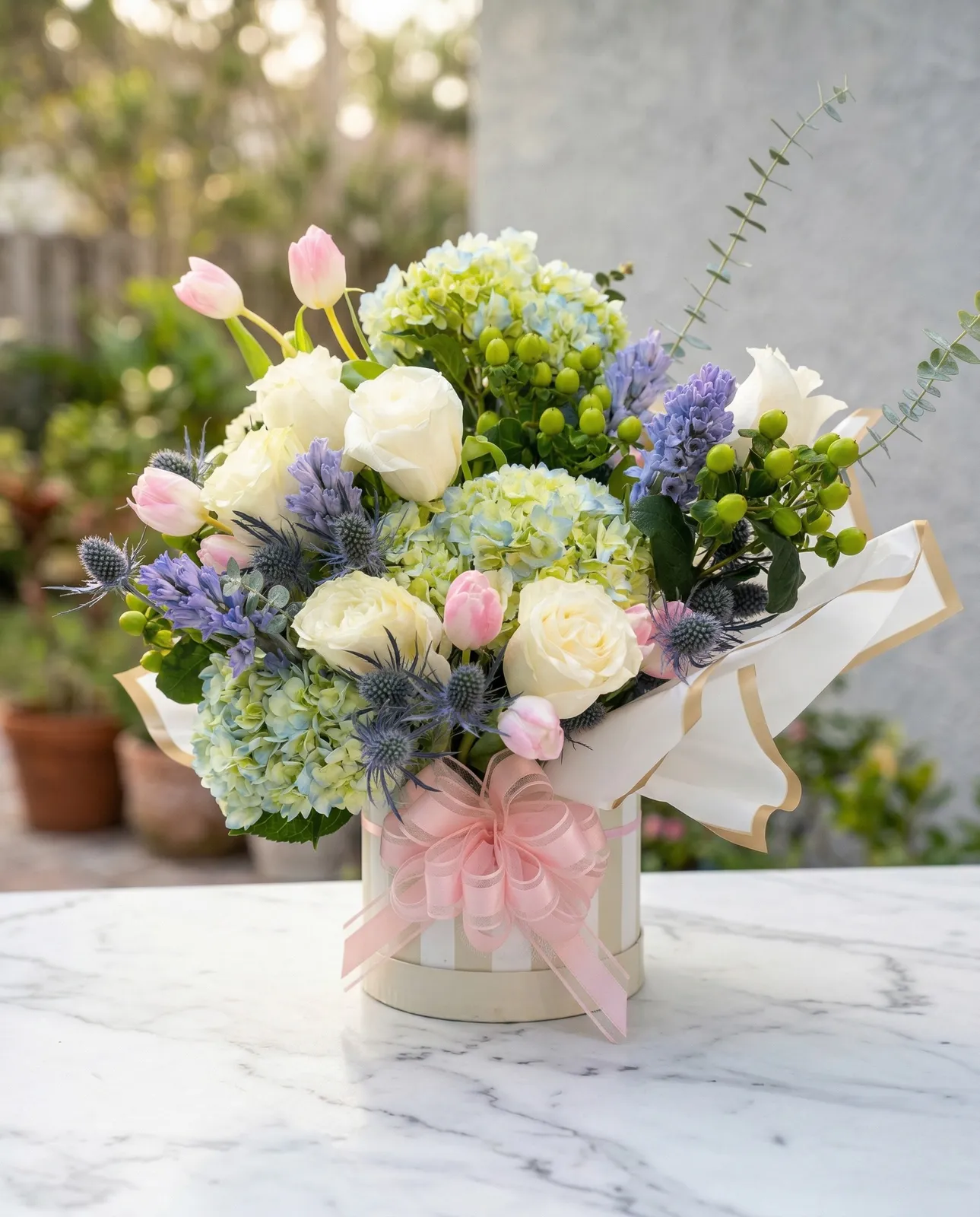
A flower box arrives already arranged and secured inside a decorative box, hatbox, or in some cases a novelty vessel like a handbag-style vase — rather than loose stems wrapped in paper that need to go into a vase at home. Our Tulip Wish arrives in a gift box finished with a satin bow; several of our larger designs use a signature lined hatbox instead. Either way, the box itself is part of the presentation, not just packaging to be thrown away.
What a traditional bouquet is
A bouquet is the more familiar format — stems gathered together, typically wrapped or delivered in a vase, meant to be displayed as a classic arrangement. Most of our anniversary, birthday, and sympathy designs fall into this category. It's the format most people picture by default when they think "flower delivery."
The real practical difference: no vase required
This is the most concrete, non-cosmetic difference. A flower box arrives ready to display on a desk, counter, or nightstand with no vase needed — which matters more than it sounds for a dorm room, a hospital room, or an office desk, where a vase may not be available at all. A bouquet either needs to be delivered in a vase or requires the recipient to have one on hand.
Presentation and the "reveal" moment
A flower box is designed around the moment it's opened — the lid comes off and the arrangement is already complete, which creates a distinct unboxing moment that a wrapped bouquet doesn't really have. Some of our flower box designs go a step further: our Purse-Petal arrangement comes in a handbag-style vase that doubles as a keepsake after the flowers are gone, rather than something that gets recycled.
Footprint and placement
Flower boxes tend to sit lower and more compactly than a tall vase arrangement, which makes them a better fit for a crowded desk or a small side table. A traditional bouquet in a vase generally reads as more of a statement piece — better suited to a dining table, entryway, or somewhere it has room to be the visual focus of the space.
A Few Options to Consider
Tulip Wish
$75
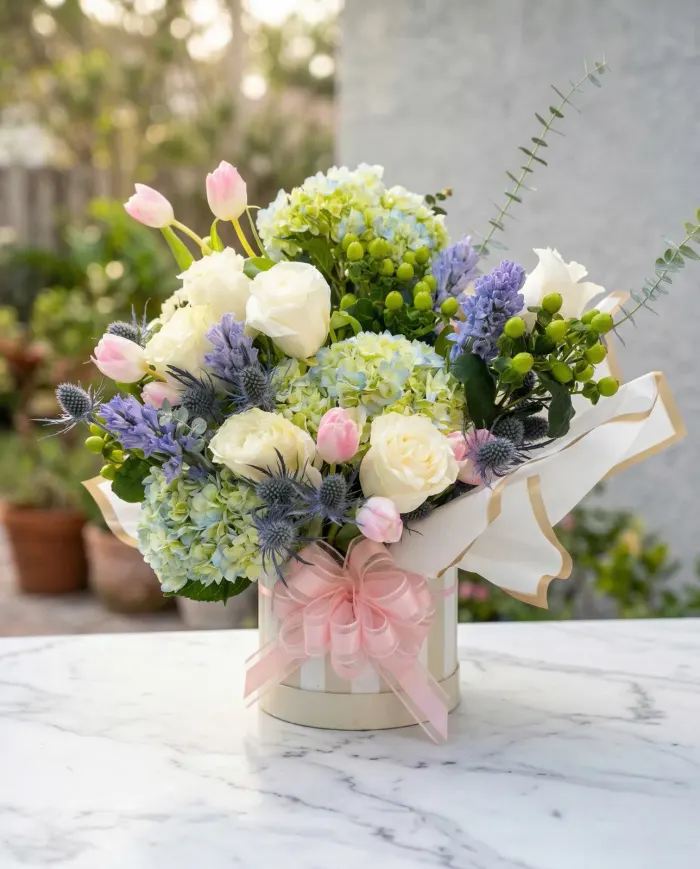
Pink tulips and white roses nestle among green hydrangea, purple hyacinth, and blue thistle in a chic gift box finished with a satin bow. A fresh, gift-ready surprise for any occasion.
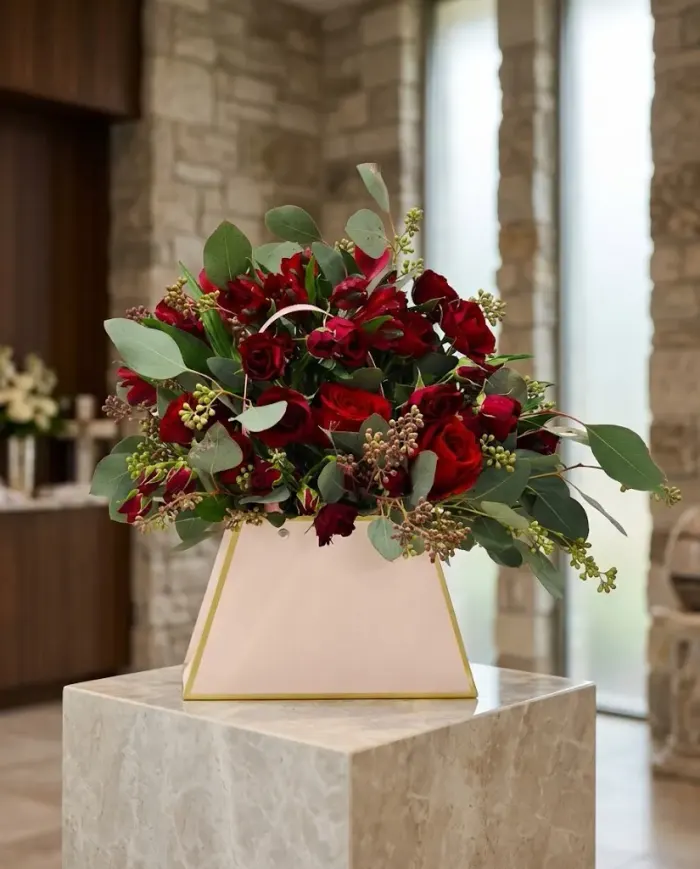
Purse-Petal
$50
Red roses and tulips nestle in trailing eucalyptus, presented in our chic handbag-style vase. A playful, fashion-forward gift for the flower lover who has everything.
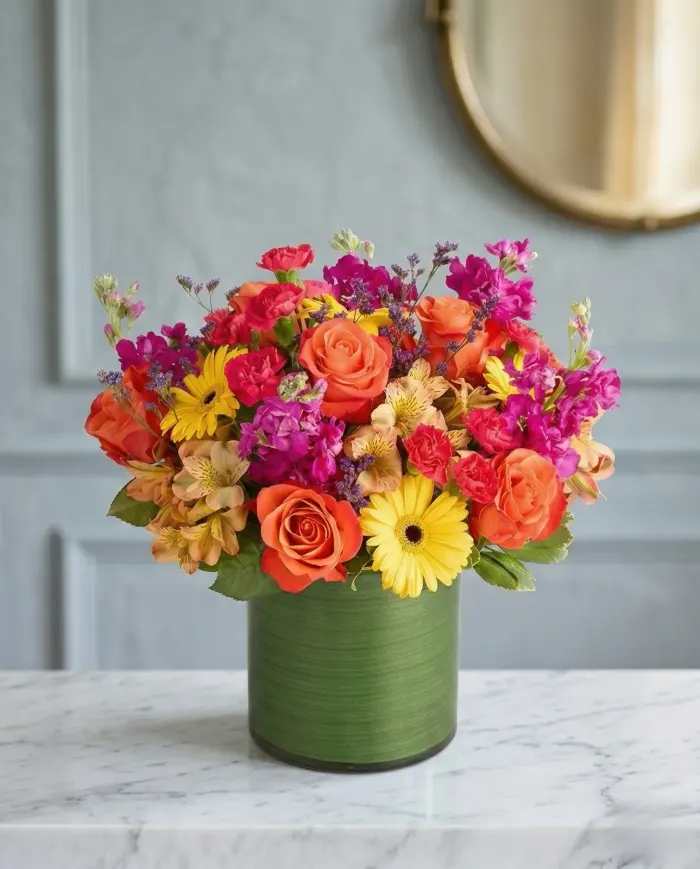
Citrus Coast
$95
Orange roses, yellow gerbera daisies, and red carnations mingle with purple stock and statice in a fresh leaf-wrapped vase. A zesty, colorful pick-me-up for any occasion.
Price isn't the deciding factor
It's a common assumption that a box costs more than a bouquet, but that's not really true across our own collection — our flower box designs range from $50 (like Purse-Orange) up to $350 for our largest hatbox designs, which is roughly the same spread as our vase arrangements. The format is a presentation choice, not a price tier.
Does one last longer than the other?
Not meaningfully — both formats use the same fresh-cut flowers, so vase life comes down to the usual factors (flower type, room temperature, how often the water is refreshed) rather than the container itself. A flower box isn't a preserved or "forever" arrangement; it's a fresh design that simply doesn't require a vase to be added at home. If anything, a bouquet in a proper vase with regularly changed water can sometimes have a slight edge, since there's more water volume for the stems to draw from than a shallow box base typically holds.
Can a flower box be rearranged later?
It can, if you want to — most flower box designs can be lifted out and moved into a vase of your own later in the week, once a few blooms start to fade and you want to consolidate what's left. It's not required, but it's a reasonable way to extend how the arrangement looks past the first few days.
Matching the format to the occasion, not just the space
Beyond where the flowers will physically sit, the occasion itself sometimes points toward one format more than the other. A birthday gift heading to a coworker's desk or a get-well arrangement for a hospital room both lean naturally toward a box. A sympathy arrangement for a family's home, or an anniversary piece meant to sit on a dinner table, tends to feel more fitting as a traditional vase bouquet — the classic look reads as more appropriate for those moments than a novelty box would.
Which one should you actually send?
A flower box tends to be the better choice for an office, a hospital room, a dorm, or anywhere a vase isn't a safe assumption, and for anyone who'd appreciate a distinct "unboxing" moment. A traditional bouquet in a vase makes more sense as a home gift, a centerpiece for a table, or when you want the classic, expected look of a flower delivery. Neither one is more "correct" — it comes down to where the flowers are actually going to live.
Frequently asked questions
Does a flower box need water added at home?
Our flower box designs arrive ready to display — no arranging or vase setup needed on your end.
Is a flower box more expensive than a bouquet?
Not inherently — our flower box designs range from $50 to $350, roughly the same range as our vase arrangements. The format doesn't determine the price.
Which is better for an office gift?
A flower box is usually the more practical choice for an office, since it doesn't require a vase and takes up less desk space.
Can I request a bouquet in a box instead of a vase?
Reach out before ordering if you'd like a specific format — availability depends on the exact design, since not every arrangement is built to work both ways.
Do flower boxes come in large, statement sizes too?
Yes — our Over-the-Top design is a full, abundant hatbox arrangement, proving the box format isn't limited to smaller, compact gifts.