
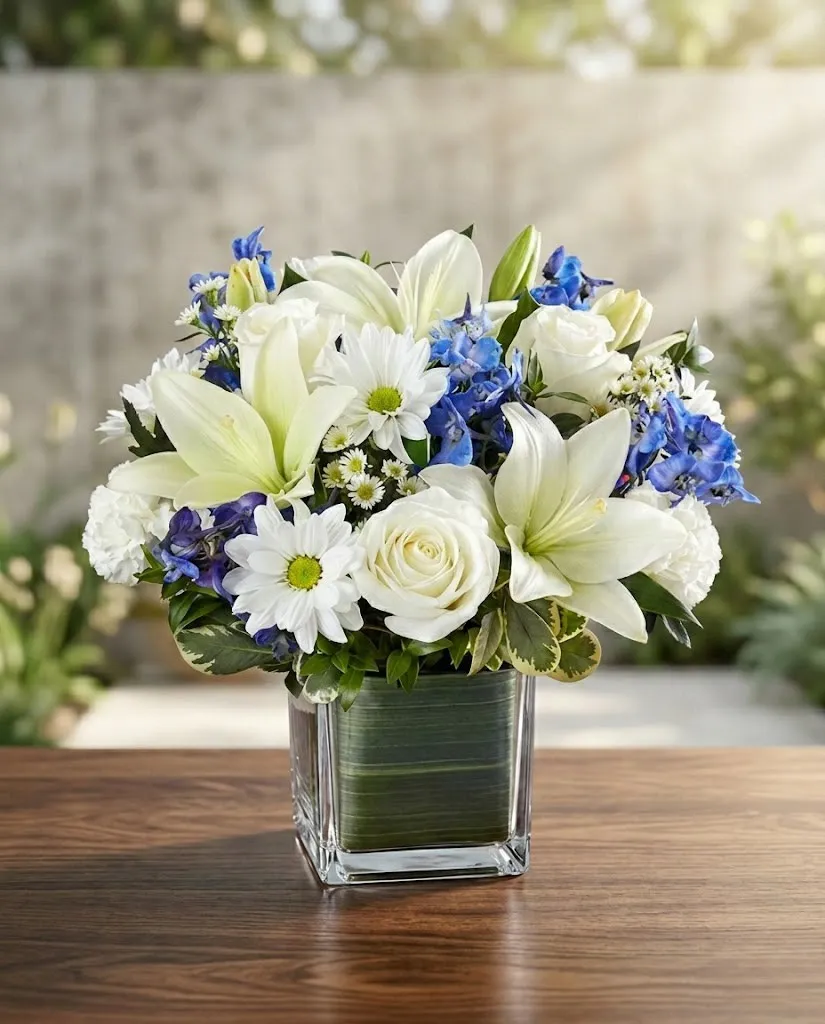
Flowers are one of the most common ways to celebrate a new baby, but a hospital room isn't quite the same as a living room — there are real, practical reasons to think about scent, size, and timing before ordering, beyond just picking something pretty. Here's what's actually worth knowing before you send.
Do hospitals actually allow flowers?
It depends on the unit, and policies vary by hospital. Most standard maternity or postpartum rooms allow fresh flowers without issue. NICUs are the major exception — flowers are almost always restricted there, typically due to infection-control policies for a more vulnerable patient population. If you know the baby needed any NICU time, it's worth calling the unit directly before ordering rather than assuming.
Should you check with the family before sending anything?
It's worth considering, especially for a hospital delivery. Some new parents are genuinely delighted by flowers arriving during their stay; others are exhausted, focused on recovery, or simply don't have the bandwidth to manage gifts on top of a new baby and a room full of visitors. A quick check with a close family member — rather than the parents directly — can clarify whether hospital delivery is welcome, or whether waiting for the family to be home is the better call.
Flowers that are considered safe
Roses, carnations, daisies, and orchids are generally considered gentle, low-pollen choices that work well in a hospital room or nursery. Our Cloud Nine Orchids arrangement is a good example — orchids are elegant without being overwhelming in a small space.
What to avoid, and why
Heavily scented flowers, lilies especially, can feel overwhelming in a small shared room — stargazer lilies in particular have an intense fragrance that isn't ideal near a sensitive newborn. Very pollen-heavy blooms like sunflowers and some fully open dahlias also shed pollen readily, which is more of a mess in a hospital room than it would be at home. None of this makes those flowers unsafe exactly — they're just a better fit for a home delivery than a shared hospital space.
A Few Options to Consider
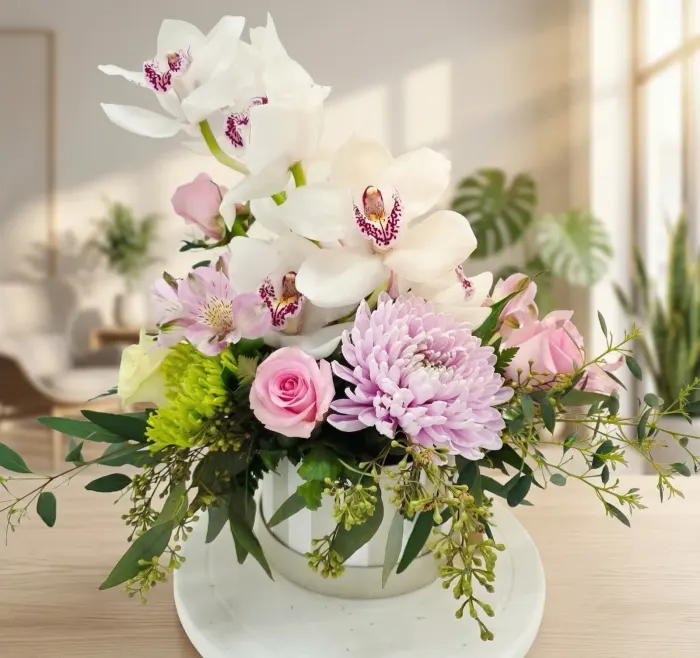
Cloud Nine Orchids
$110
Elegant white cymbidium orchids arch gracefully over pink roses, lavender mums, and alstroemeria in a chic striped gift box. A dreamy, upscale surprise for any celebration.
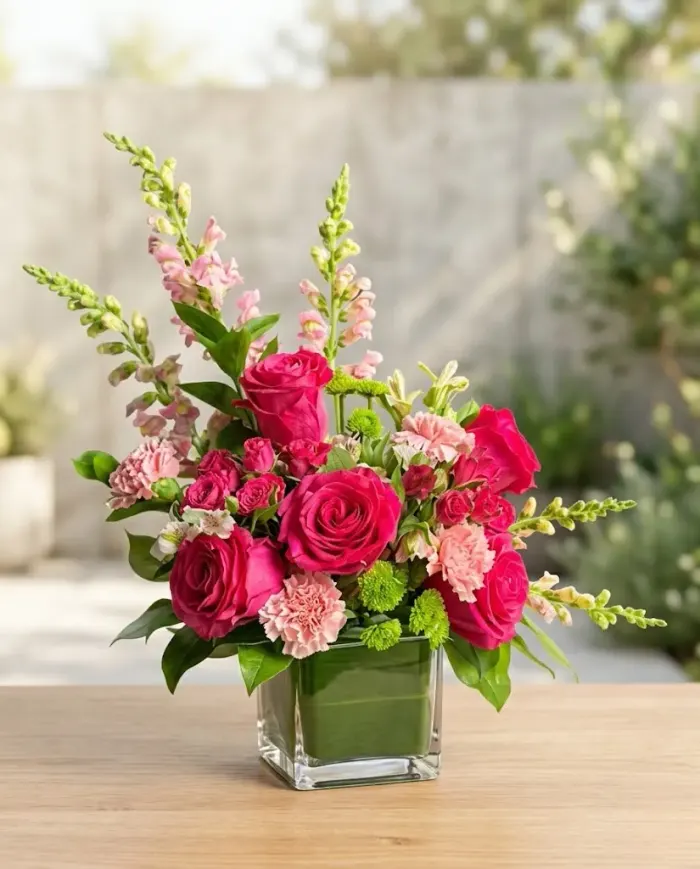
Sweet Shine
$75
Vibrant magenta roses take center stage among soft pink carnations, snapdragons, and green button mums in a sleek glass cube. A joyful pop of color for any birthday celebration.
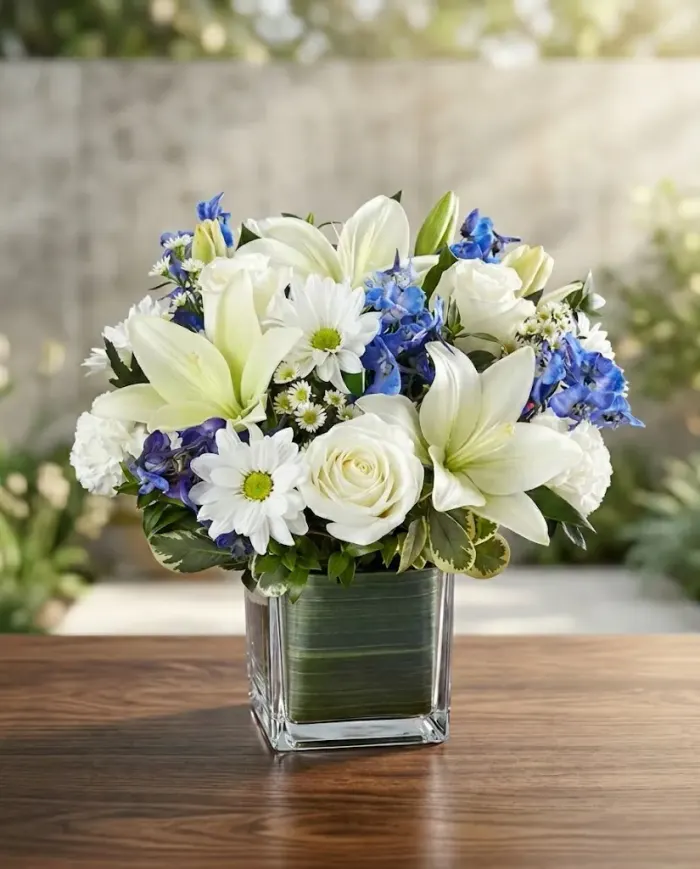
Summer Blues
$75
Crisp white lilies, roses, and daisy chrysanthemums are lifted by touches of blue delphinium in a clean glass cube. A fresh, breezy arrangement for effortless birthday charm.
Keep it compact
Shared rooms and hospital tray tables have limited surface space, so a smaller, well-contained arrangement is more practical than a large, sprawling one — it's considerate of both the space and anyone else sharing the room. A design in a stable, low container also travels better if the arrangement needs to be moved between the hospital room and the car on discharge day, which happens more often than people expect.
Call before you send
Policies vary not just hospital to hospital but sometimes unit to unit within the same hospital. A quick call to the specific floor or ward confirms current rules before you place an order, which is a more reliable approach than assuming a general hospital policy applies everywhere in the building.
Consider timing your delivery for home instead
Modern maternity stays are often just one to three days, which means flowers delivered to the hospital room only get a short window of being seen before the family heads home. Timing delivery for about a week after the birth, once the family is settled at home, means the gift is appreciated for longer and doesn't need to compete with a short hospital stay's worth of other visitors and gifts.
Colors, if you don't know the baby's gender
Soft pastels are the safe default — greens, whites, and soft yellows work regardless of whether the baby is a boy or girl, without leaning into the more traditional pink-or-blue assumption if you'd rather not guess. If the family has already announced the baby's gender and you want to lean into it, soft pink or soft blue accents are a natural way to personalize the arrangement without going overly literal.
A practical addition worth considering
New parents often end up with more flowers than surface space to put them on, especially if several people send arrangements around the same time. If you want the gift to stand out and actually help, pairing flowers with something practical — a meal delivery gift card, a stocked diaper bag item, or simply a card offering to help with something specific in the coming weeks — tends to be remembered longer than the flowers alone, without needing to skip the flowers entirely.
A simple card message that works
Congratulations messages don't need to be elaborate. "Welcome to the world, [baby's name]" or "So happy for your growing family" both cover it. If you know the family well, a short note offering to help once things settle down tends to mean more than an especially clever card message.
Frequently asked questions
Can I send flowers directly to a NICU?
Usually not — NICUs almost always restrict fresh flowers for infection-control reasons. Confirm with the unit directly, or plan to send to the family's home instead.
Are sunflowers a bad choice for a new baby?
Not unsafe, but not ideal for a hospital room specifically — they shed pollen more readily than roses, carnations, or orchids, which is more of a practical concern in a shared space than at home.
Is it better to send flowers to the hospital or wait for the family to be home?
Both are appropriate, but sending to the home about a week after the birth often means the gift gets appreciated for longer, since hospital stays are typically brief.
What if I don't know the baby's gender?
Soft pastels — greens, whites, and light yellows — are a safe, welcoming default that doesn't lean toward pink or blue.
Should I ask the parents directly if flowers are okay?
It can feel awkward to ask outright, so checking with a close family member first is usually the more comfortable route if you're unsure whether hospital delivery is welcome right now.
What if it's a scheduled delivery versus an unplanned one?
A known date makes it easier to time delivery for exactly when it's most useful — either the day the family gets home, or shortly after. For an unplanned or early arrival, it's fine to wait a few extra days until you actually know the situation has stabilized before sending anything.